A body fat calculator estimates how much of your weight is fat, using only a few tape measurements and your height. It tells you far more than the scale alone, because two people with the same weight can look and feel completely different depending on how much of that weight is muscle.
This guide explains the most popular home method, shows you exactly how to measure, and helps you turn the result into a useful progress tracker.
Why Body Fat Percentage Matters
Your body fat percentage is the share of your total weight that comes from fat. It is a more useful health and fitness marker than weight alone because:
- It separates fat from muscle, bone, and water.
- It shows progress even when the scale doesn't move, such as when you lose fat and gain muscle at the same time.
- Excess fat, especially around the waist, is linked with higher risk of heart disease and type 2 diabetes.
How a Body Fat Calculator Works
Most online tools use the U.S. Navy circumference method. It was developed from research comparing tape measurements with lab tests and remains popular because it is simple and needs no special equipment.
The Navy Formula Behind Most Body Fat Calculator Tools (Inches)
Men: Body fat % = 86.010 × log10(waist − neck) − 70.041 × log10(height) + 36.76
Women: Body fat % = 163.205 × log10(waist + hip − neck) − 97.684 × log10(height) − 78.387
You don't need to calculate the logs yourself. A body fat calculator does this instantly. What you do control is the accuracy of your measurements.
What You Need
- A flexible, non-stretch tape measure
- A mirror, or a helper
- A notebook or app to record results
- A free online body fat calculator
How to Measure Correctly: Step by Step
1. Height
Stand barefoot against a wall, heels together, looking straight ahead. Measure to the top of your head.
2. Neck
Place the tape just below the voice box (Adam's apple), sloping slightly down toward the front. Keep the tape snug but not pressing into the skin.
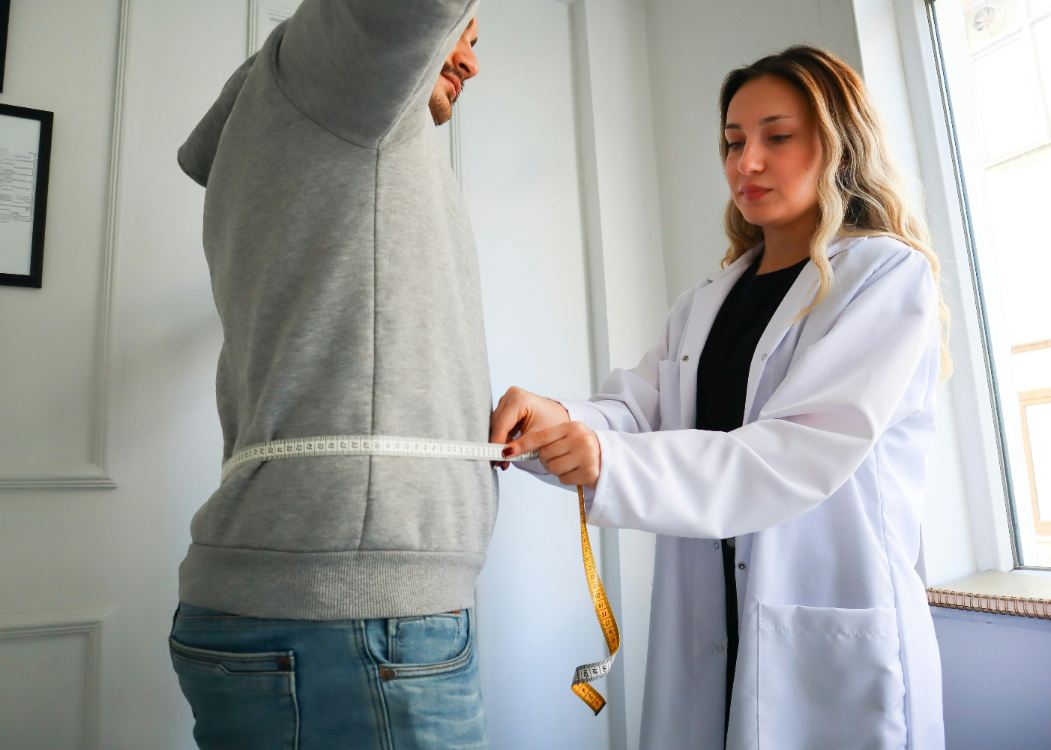
3. Waist
- Men: measure horizontally at the level of the navel.
- Women: measure at the narrowest point of the waist, usually above the navel.
Breathe out normally and measure at the end of the breath. Do not suck in your stomach.
4. Hips (Women Only)
Measure around the widest part of the buttocks, with feet together.
Pro tip: Take each measurement three times and use the average. Small tape errors have a big effect on the final number.
Worked Examples
Man: height 70 in, neck 15 in, waist 34 in → about 17.5% body fat
Woman: height 65 in, neck 13 in, waist 30 in, hips 38 in → about 28.6% body fat
Healthy Body Fat Ranges
These general ranges are widely used by fitness organizations:
| Category | Men | Women |
|---|---|---|
| Essential fat | 2–5% | 10–13% |
| Athletes | 6–13% | 14–20% |
| Fitness | 14–17% | 21–24% |
| Average | 18–24% | 25–31% |
| Above average / obese | 25% and above | 32% and above |
Women naturally carry more essential fat for hormonal and reproductive health, so their healthy ranges are higher. Ranges also tend to rise slightly with age.
How Accurate Is a Body Fat Calculator?
Tape-based methods are estimates, typically within a few percentage points of lab results for most people. Accuracy drops for:
- Very muscular people, whose thick necks can lower the estimate
- People with very high body fat, where fat distribution varies more
- Inconsistent measuring, which is the biggest source of error
If you need more precision than any body fat calculator can give, a DEXA scan or a professional skinfold test can help. But for tracking change over time at home, the tape method is practical and free.
The Unique Value Section: Why One Inch Changes Everything
Here is something most guides don't mention: the Navy formula is very sensitive to your waist number.
In the male example above, increasing the waist from 34 to 35 inches – just one inch – raises the estimate from about 17.5% to 19.4%. That's nearly two percentage points from a single inch.
What this means for you:
- A loose tape or measuring at a slightly different spot can create a "fake" change of 1–2%.
- After a large meal or a salty day, bloating can temporarily increase your waist.
- Real fat loss shows up as a steady downward trend over weeks, not a sudden drop.
A Simple Consistency Routine
- Measure on the same day each week or every two weeks.
- Measure in the morning, before eating.
- Use the same tape and the same landmarks every time.
- Track the trend over 4–8 weeks, not single readings.
Followed this way, a body fat calculator becomes a reliable progress tool rather than a source of confusing numbers.
How to Lower Body Fat Safely
- Eat in a moderate calorie deficit, not a crash diet.
- Prioritize protein to protect muscle.
- Lift weights two to four times a week to keep or build muscle.
- Walk daily and stay active outside the gym.
- Sleep well, since poor sleep can affect hunger and recovery.
Check with a doctor before making big changes if you have a medical condition.
Expert Tip and Final Takeaway
A body fat calculator gives you a clearer picture of your health than weight alone, as long as your measurements are careful and consistent. Use the Navy method, measure three times, and focus on your trend over several weeks.
Expert tip: Combine your body fat percentage with a monthly photo and your waist measurement. When all three move in the right direction together, you can be confident that you are losing fat, not just water.